 Oct 16, 2026
What Size Home Battery Do You Need? A Guide for Australian Households
Choosing a home battery isn't just about picking the biggest capacity you can afford. The right size depends on how much electricity your household uses, how much excess solar energy you generate, and what you want your battery to do.
A battery that's too small may not cover enough of your evening electricity use. One that's too large may cost more than necessary, especially if you don't have enough surplus solar energy to charge it regularly.
So, how do you work out what size battery is right for your home?
Start With Your Electricity Bill
Your electricity bill is one of the easiest places to start.
Check your average daily electricity usage, measured in kilowatt‑hours (kWh). If you're planning to add a battery to an existing solar system, it's also worth checking how much electricity you export to the grid during the day.
For a rough estimate, a household with a $300 monthly electricity bill might use around 25–33kWh per day, assuming an average electricity rate of $0.30–$0.40 per kWh. This is only a guide, as daily supply charges, solar credits and different electricity rates can affect the calculation.
Your actual usage, shown on your electricity bill, is a better starting point.
One important distinction: your total daily electricity use isn't the same as the amount your battery needs to supply. Your solar panels may power your home during the day, while your battery stores excess energy for later.
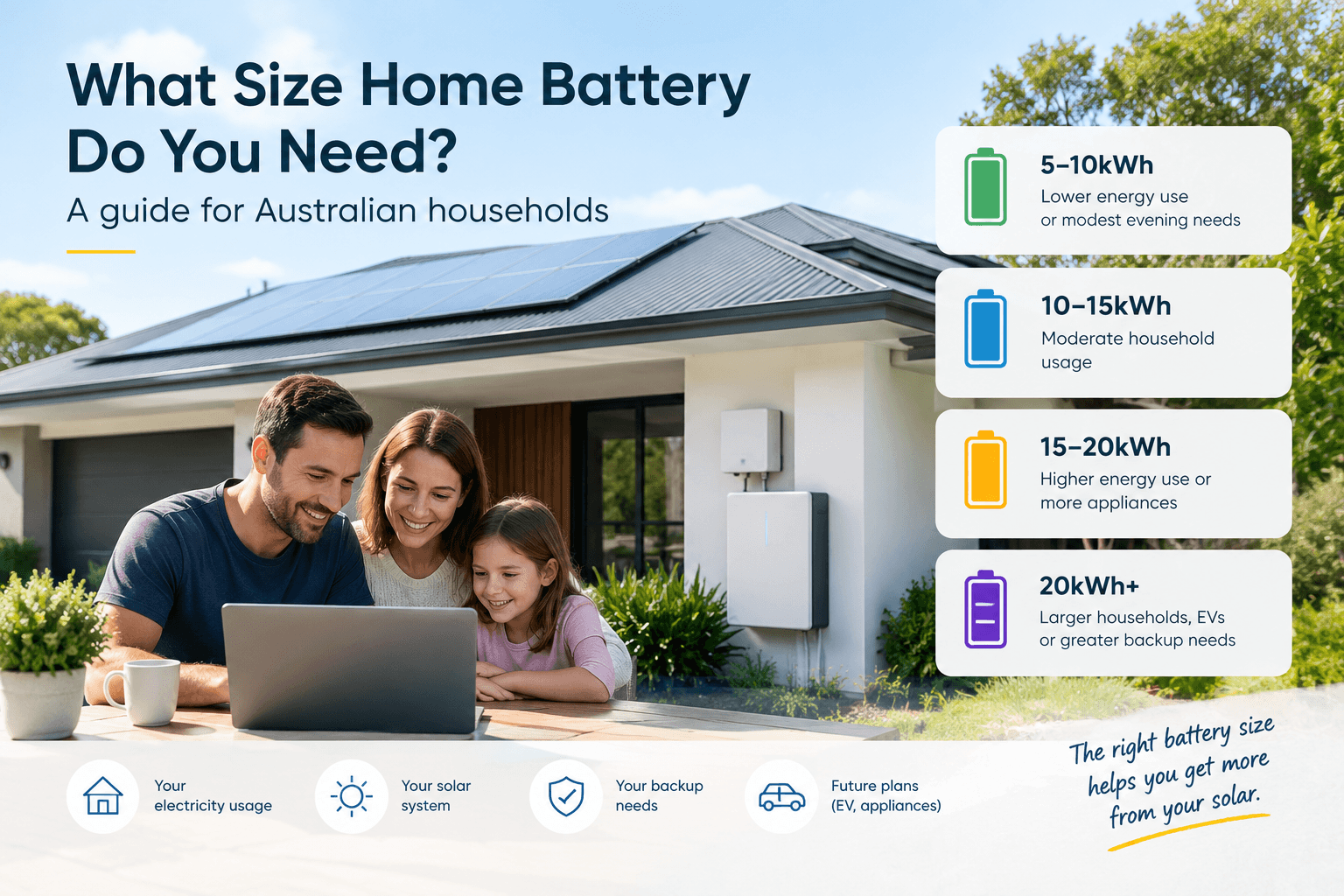
Which Battery Size Might Suit Your Home?
Every household is different, but the following ranges can help you understand where to start.
5–10kWh: Smaller storage needs
A smaller battery may suit households with relatively low evening electricity use, or homeowners who want to store some excess solar energy without investing in a larger system.
10–15kWh: Moderate household usage
This range may suit households that want to cover a meaningful portion of their evening and overnight electricity consumption.
15–20kWh: Higher energy use
A larger battery may be worth considering if your household regularly uses more electricity at night, runs multiple appliances, or has higher overall energy demand.
20kWh and above: Larger storage or specific energy needs
Larger systems may suit households with substantial electricity consumption, an EV, or greater storage requirements. However, the additional capacity is only useful if you can charge and use that energy effectively.
These are indicative ranges, not fixed recommendations based on household size. A family of four with modest evening usage may need less storage than a smaller household with an EV and high overnight consumption.
Already Have Solar Panels? Check Your Excess Energy
Your solar system plays a major role in determining the right battery size.
During the day, your solar panels supply electricity to your home. Any surplus energy can be exported to the grid or stored in a compatible battery for later use.
If your household uses most of its solar generation during the day, you may have limited excess energy available to charge a large battery.
On the other hand, if your system regularly exports substantial amounts of electricity, a larger battery could allow you to store more of that energy for evening use.
Before choosing a battery, consider:
- How much excess solar energy your system generates.
- Whether your existing inverter is compatible with the proposed battery.
- Whether your household's electricity usage changes significantly between seasons.
If you're installing a battery with an existing solar system, an assessment of your current setup can help avoid choosing a battery that's larger than your needs.
Are You Looking to Save on Bills or Get Backup Power?
Your main reason for installing a battery can change the size you need.
If your priority is reducing electricity bills
Focus on how much electricity you buy from the grid in the evening and overnight. Your battery should be sized around your usage patterns, available solar surplus and electricity tariff.
A larger battery doesn't automatically mean greater savings. If you rarely use the additional stored energy, the extra upfront cost may not be worthwhile.
If you want backup power during a blackout
Think about which appliances you want to keep running. Essential loads might include your refrigerator, lights, internet router and selected power points. If you want to operate air conditioning or other high‑power appliances, your system needs to be assessed accordingly.
Battery capacity determines how much energy is available over time. The inverter's power rating and backup configuration determine how much power can be supplied and which circuits can operate during an outage.
Not every battery installation provides whole‑home backup, so make sure your requirements are discussed before installation.
Planning to Buy an EV or Add More Appliances?
It's worth thinking about future electricity demand before settling on a battery size.
An electric vehicle, swimming pool, ducted air conditioning or electric hot water system can increase your household's energy consumption.
However, an EV doesn't automatically mean you need a much larger battery. If you can charge your vehicle during the day using solar power, your needs may be different from those of a household that charges overnight.
Consider when you expect to use these appliances and whether your solar system can support the additional demand. Planning ahead can help you choose a system that suits both your current lifestyle and future needs.
Is a Bigger Battery Always Better?
Not necessarily.
A larger battery offers more storage, but the extra capacity needs to deliver real value.
Before upgrading to a larger system, ask yourself three questions:
- Can my solar panels charge it? Limited excess solar generation may leave some capacity unused.
- Will I use the stored energy? Your evening and overnight consumption determines how much energy you can realistically benefit from.
- Is the extra cost worthwhile? Compare the additional installed cost with the expected savings and your backup requirements.
The goal isn't to buy the largest battery available. It's to find a system that balances capacity, cost, solar generation and household needs.
Frequently Asked Questions
Is a 10kWh battery enough for a typical Australian home?
It may be enough to cover a portion of evening and overnight electricity use, depending on your household's consumption. Check your actual usage before deciding.
Should my battery capacity match my daily electricity usage?
Not necessarily. Solar panels can power your home during the day, so your battery may only need to cover part of your total daily consumption. Backup requirements may also affect your choice.
Can I add a battery to my existing solar system?
In many cases, yes. Compatibility depends on your existing inverter, battery technology and electrical setup. Your installer can assess whether additional equipment or modifications are required.
Will a bigger battery save me more money?
Not always. Savings depend on how much surplus solar energy you can store, when you use the stored electricity, your electricity tariff and the total system cost.
Find the Right Battery Size for Your Home
Choosing a home battery starts with understanding how your household uses electricity, not simply selecting a capacity from a product list.
PA Power helps homeowners across Melbourne and regional Victoria explore solar, battery storage, whole‑home backup and EV charging solutions.
Whether you're adding a battery to an existing solar system or planning a new installation, we can help you assess your requirements and explore suitable options.
Request a quote from PA Power to discuss a battery solution tailored to your home.
Battery sizing and potential savings depend on household electricity use, solar generation, electricity tariffs, equipment compatibility and installation requirements. Final system specifications should be confirmed through an individual assessment.