 Nov 19, 2026
Can You Install a Home Battery Outside in Australia?
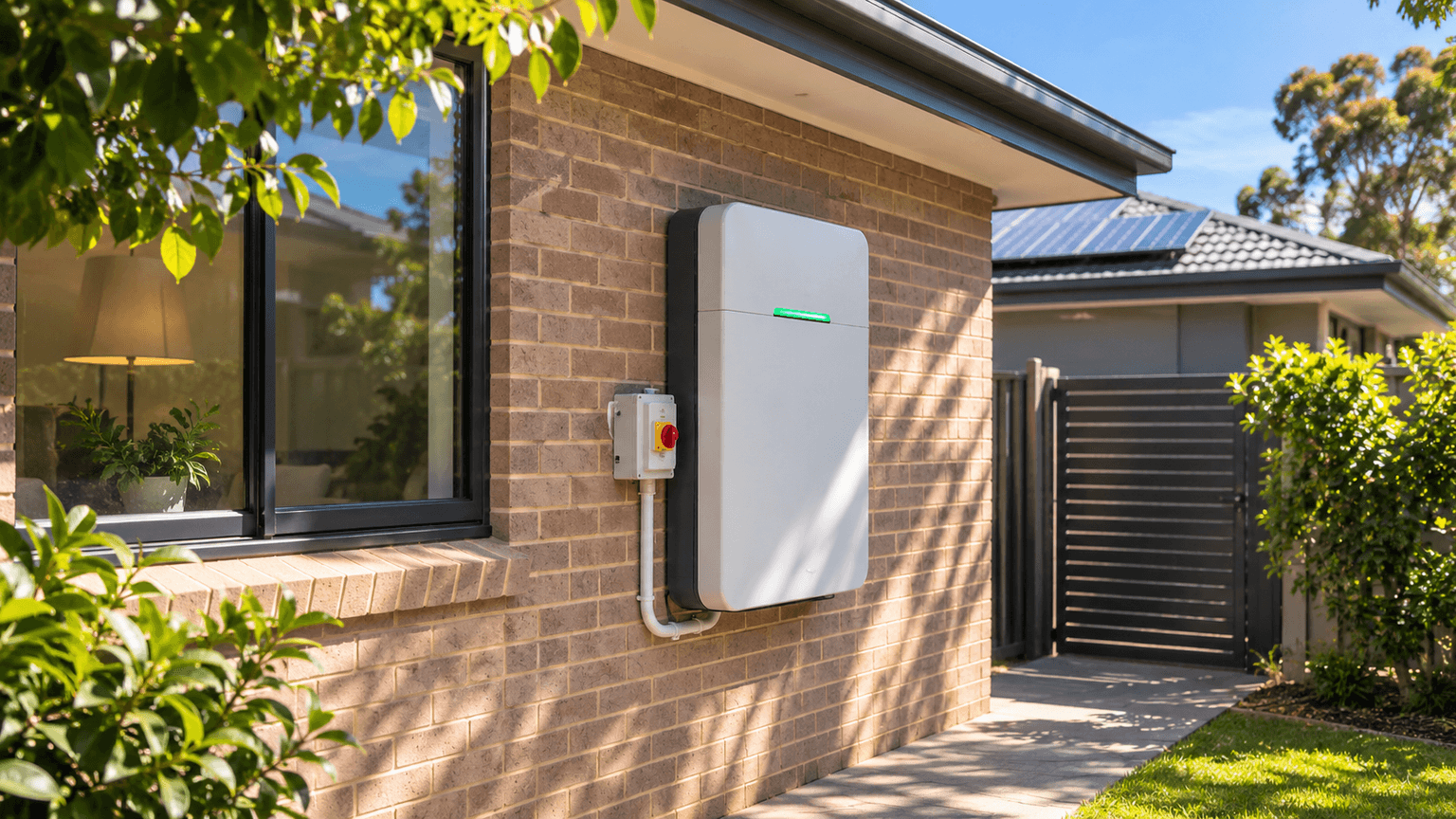
Yes, many home batteries can be installed outdoors in Australia, provided the battery is designed for outdoor use and the installation meets the relevant safety requirements.
For homeowners with limited garage space, installing a solar battery outside may be a practical option. However, choosing the right location involves more than finding an empty wall.
Direct sunlight, rain, temperature changes, wall materials and distances from doors and windows can all affect where a battery can safely be installed.
So, what should you consider before installing a home battery outside?
Are Home Batteries Suitable for Outdoor Installation?
Many modern home battery systems are designed for both indoor and outdoor installation.
However, not every battery is suitable for exposure to outdoor conditions.
Before choosing an installation location, check the manufacturer's specifications, particularly the battery's Ingress Protection (IP) rating and operating temperature range.
An IP rating indicates how well an electrical enclosure is protected against dust, water and other external elements.
For example:
- IP54: Provides limited dust ingress protection and protection against splashing water.
- IP65: Provides dust‑tight protection and resistance to water jets.
- IP66: Provides dust‑tight protection and resistance to powerful water jets.
A higher IP rating generally indicates greater protection against certain environmental conditions, but it doesn't automatically mean the battery can be installed anywhere outdoors.
The manufacturer's installation instructions must specifically permit the intended location and exposure conditions.
Even an outdoor‑rated battery may benefit from being installed in a sheltered area rather than being exposed to direct sunlight and extreme weather.
Where Is the Best Place to Install a Home Battery Outside?
The ideal location depends on your property's layout, the battery model and the surrounding environment.
For many Australian homes, a shaded external wall or a protected area near the garage may be worth considering.
A shaded external wall
An external wall that receives limited direct sunlight can be a suitable location for an outdoor‑rated battery.
In Australia, south‑facing walls often receive less direct sunlight than north‑facing walls, although actual exposure depends on the property and surrounding structures.
The wall must also be suitable for mounting the battery and meet the applicable fire safety requirements.
Under a covered area
A covered outdoor area may provide additional protection from direct sunlight and rain.
However, the installation must still allow adequate ventilation, maintenance access and the clearances specified by the manufacturer.
Near the garage or switchboard
Installing a battery near the home's electrical equipment may simplify certain aspects of the installation.
However, the closest location isn't necessarily the safest or most cost‑effective.
The installer must assess cable routes, electrical protection, available space and any additional safety requirements.
Regardless of the location, the battery should remain accessible for inspection and maintenance.
Can a Home Battery Be Exposed to Rain and Sunlight?
Outdoor‑rated batteries are designed to tolerate certain environmental conditions, but prolonged exposure to harsh weather can still affect their performance and lifespan.
Direct sunlight and heat
Australian summers can bring high temperatures, particularly in areas exposed to strong afternoon sunlight.
Excessive heat may cause a battery's thermal management system to work harder or temporarily limit charging and discharging performance.
Over time, prolonged exposure to high temperatures can also contribute to battery degradation.
Choosing a shaded location can help reduce unnecessary heat exposure.
Rain and moisture
Some batteries have weather‑resistant enclosures that allow outdoor installation.
However, the battery's IP rating and manufacturer specifications determine the level of water exposure it can safely tolerate.
Outdoor installation should also consider drainage, possible flooding and water accumulation around the equipment.
Cold weather
In cooler regions such as Melbourne and regional Victoria, winter temperatures can also affect battery performance.
Some lithium batteries may limit charging when temperatures fall below their permitted operating range.
The right installation location should protect the battery from environmental extremes throughout the year, not just during summer.
What Are the Australian Safety Requirements for Outdoor Battery Installation?
Home battery installations in Australia must comply with applicable electrical safety requirements, including AS/NZS 5139 and AS/NZS 3000.
These standards address important considerations such as battery placement, electrical safety, fire protection and installation clearances.
There are restrictions on installing batteries near certain doors, windows, ventilation openings and appliances.
For many battery systems, restricted zones include areas within 600mm horizontally and 900mm below certain openings or appliances.
However, the precise requirements depend on the battery system, the type of opening and the applicable version of the standard. Amendments to AS/NZS 5139 have also introduced clarifications and exceptions for certain openings.
Wall materials are another important consideration.
If a battery is installed against a wall separating it from a habitable room, additional fire protection may be required.
Brick, concrete and certain other non‑combustible materials may provide suitable protection, while some timber or other combustible walls may require an appropriate non‑combustible barrier.
These requirements are not something homeowners should estimate themselves.
A qualified battery installer should assess the proposed location and confirm compliance before installation begins.
Can You Install a Home Battery on Any External Wall?
Not necessarily.
Even if a wall has enough physical space for a battery, it may not meet the installation requirements.
Before approving an external wall installation, an installer may need to consider:
- Wall construction: Whether the wall can safely support the battery and meets fire protection requirements.
- Nearby openings: The location of doors, windows and ventilation openings.
- Sun exposure: Whether the battery will receive excessive direct sunlight.
- Electrical access: The distance to the switchboard, inverter and other relevant equipment.
- Physical protection: Whether the battery could be damaged by vehicles, falling objects or everyday activities.
- Maintenance access: Whether there is enough space for inspection, servicing and safe operation.
For example, an external wall beside a driveway may appear convenient, but additional impact protection could be necessary if a vehicle could strike the battery.
Similarly, a wall close to a bedroom window may not be suitable without considering the applicable clearance requirements.
A site assessment can help identify a safe and practical installation location.
Is It Better to Install a Home Battery Indoors or Outdoors?
Both indoor and outdoor installations can be suitable, depending on the property and the equipment.
Outdoor installation
An outdoor battery installation may be worth considering if:
- Your garage has limited available space.
- You have a suitable shaded external wall.
- The battery is rated for outdoor installation.
- The location meets electrical and fire safety requirements.
However, outdoor installations require careful consideration of weather exposure, temperature and physical protection.
Indoor installation
Garages and certain non‑habitable utility areas may provide a more stable environment for battery storage.
Indoor installation can offer additional protection from direct sunlight and weather, but it also requires adequate space, ventilation and compliance with safety requirements.
Home batteries generally cannot be installed in domestic habitable rooms such as bedrooms and living rooms.
Neither option is automatically better.
The most suitable location is one that balances safety, environmental protection, installation requirements and long‑term accessibility.
Does Outdoor Installation Affect Home Battery Lifespan?
The location of your home battery can influence its operating conditions and long‑term performance.
Most home batteries have a specified operating temperature range, and many include thermal management systems to help regulate internal temperatures.
However, operating within the permitted temperature range doesn't necessarily mean every temperature is equally beneficial for battery lifespan.
Repeated exposure to high temperatures can accelerate battery ageing, while very low temperatures may temporarily reduce charging performance.
An outdoor battery installed in a shaded, well‑ventilated location may experience more favourable operating conditions than one exposed to strong afternoon sunlight.
Battery lifespan also depends on factors such as battery chemistry, charging cycles, depth of discharge and the manufacturer's operating specifications.
Choosing a suitable installation location is one part of protecting your investment.
Frequently Asked Questions
Can I install a solar battery on an outside wall?
Yes, many outdoor‑rated solar batteries can be installed on an external wall. However, the wall construction, nearby openings, environmental exposure and relevant Australian safety requirements must be assessed first.
Does a home battery need to be under cover?
Not always. Some batteries are designed for outdoor installation without additional shelter. However, protection from direct sunlight and harsh weather may improve operating conditions. Always follow the manufacturer's installation instructions.
Can rain damage an outdoor home battery?
An appropriately rated and correctly installed outdoor battery is designed to withstand specified levels of water exposure. However, flooding, damaged enclosures and exposure beyond the manufacturer's limits can create safety risks.
Can I install a home battery next to my front door?
Not necessarily. Australian battery installation standards restrict placement near certain exits and openings. The applicable clearances must be checked by a qualified installer.
Can I install a home battery in my garage instead?
In many cases, yes. Garages are commonly considered for battery installations, provided the location meets fire safety, ventilation, access and physical protection requirements.
Will outdoor installation affect my battery warranty?
It can if the battery is installed outside the manufacturer's approved conditions. Check the permitted installation environments, temperature limits and any warranty exclusions before installation.
Find the Right Location for Your Home Battery
Installing a home battery outside can be a practical solution for Australian homeowners, particularly when indoor space is limited.
However, the right location depends on more than convenience.
Weather protection, temperature, wall construction, electrical access and Australian installation standards all need to be considered before installation.
PA Power helps homeowners across Melbourne and regional Victoria explore solar panel installation, home battery storage and backup power solutions.
Whether you're adding a battery to an existing solar system or planning a new solar and battery installation, we can help assess your property's requirements and explore suitable options.
Battery installation locations and safety requirements depend on the equipment, property conditions, manufacturer's instructions and applicable Australian standards. All installations must be assessed and completed by appropriately licensed and accredited professionals.